If you are raising a child in Istanbul and you are worried about their development — they may not respond to their name, avoid sharing attention, or be late to talk — you are not alone, and help is available in English. This guide explains what autism is (accurately and without scare stories), how to get a diagnosis and special education in Turkey as an English-speaking family, which approaches actually work, and how our team at Derin Çocuk can support you.
📌 Key Points
- Autism (ASD) is a lifelong neurodevelopmental difference; early support helps a child reach their potential — it is not something to “cure”.
- “Atypical autism” is an old DSM-IV term; today it falls under Autism Spectrum Disorder (often “Level 1 / mild”).
- The core supports are special education and therapies (behavioural/ABA, speech, occupational/sensory) — there is no approved medication for autism’s core features.
- Chelation and “heavy-metal detox” are not treatments for autism and can be dangerous; diets should only be tried under a doctor or dietitian.
İçindekiler
Autism in Istanbul: How We Help in English
Derin Çocuk is a special education and rehabilitation center in Istanbul supporting children with autism, ADHD and learning differences. For families who are more comfortable in English — expats, international and mixed families, and anyone new to Turkey’s system — we can guide you through every step in English: understanding your child’s needs, arranging an assessment, and building a therapy program. You can start with a free initial assessment or simply contact us.
📞 Talk to us — free first consultation (English)
What Is Autism? A Clear Overview
Autism spectrum disorder (ASD) is a lifelong neurodevelopmental difference that affects how a person communicates, interacts socially, and experiences the world (including sensory sensitivities and repetitive behaviours or focused interests). It is a spectrum: support needs range widely from one person to another. In the current diagnostic manual (the DSM-5-TR), autism is described with three support levels (Level 1–3); “Level 1” is roughly what people used to call mild or “high-functioning” autism.
You may have read the term “atypical autism.” This is an older label from the DSM-IV (1994) that was removed when the DSM-5 was published in 2013. Today these milder presentations are simply part of ASD (commonly “Level 1”). Unofficial phrases such as “pseudo-autism,” “temporary autism” or “borderline autism” are not scientific terms; autism is a lasting difference, although with early, good-quality education many challenges can be reduced.
For context on how common autism is: the U.S. CDC’s most recent estimate is that about 1 in 31 eight-year-old children is identified with ASD (2025 report, 2022 data; up from 1 in 36), and it is diagnosed several times more often in boys than girls. The World Health Organization’s global estimate is roughly 1 in 100 children. Rising numbers largely reflect broader criteria and better, earlier identification.
Early Signs and When to Seek Help
Early signs often appear before age 2 and may include limited eye contact, not responding to their name, little babbling or few words, not pointing to share interest, limited “joint attention” (looking back and forth between an object and you), and repetitive movements. No single sign means autism on its own.
If you have concerns, a free screening tool such as the M-CHAT-R (for toddlers ~16–30 months) can be a useful first step. Importantly, a screening tool flags possible risk — it does not diagnose. A formal evaluation by qualified professionals is needed for a diagnosis. Trust your instincts: if something feels different about your child’s development, it is always reasonable to ask for an assessment.
Getting a Diagnosis & Support in Turkey
For English-speaking families, Turkey’s system can feel unfamiliar, so here is the practical path:
- Medical evaluation: A diagnosis is made by a doctor (typically a child psychiatrist), often supported by developmental assessments.
- RAM (Guidance & Research Center): A state body that assesses a child’s educational needs and can recommend special education. This recommendation opens access to state-funded special education sessions. (Detailed Turkish guide: RAM raporu nasıl alınır — in Turkish.)
- ÇÖZGER (disability health board report): A medical board report for children that documents the condition and can unlock various rights and supports. (Detailed Turkish guide: ÇÖZGER raporu — in Turkish.)
- State-supported sessions: Children with the relevant reports are entitled to a number of state-funded special education and rehabilitation sessions. (Overview in Turkish: devlet destekleri.)
We can explain each of these steps to you in English and help you navigate the paperwork. For a full walkthrough, see our guide to special education in Turkey for English-speaking families; if attention or hyperactivity is also a concern, see our guide on ADHD in children. If you’re unsure where to begin, book a free assessment and we’ll map out the next steps together.
What Actually Helps: Education & Therapies
The most effective support for autism is early, consistent, individualized special education and therapy. Common, evidence-informed components include:
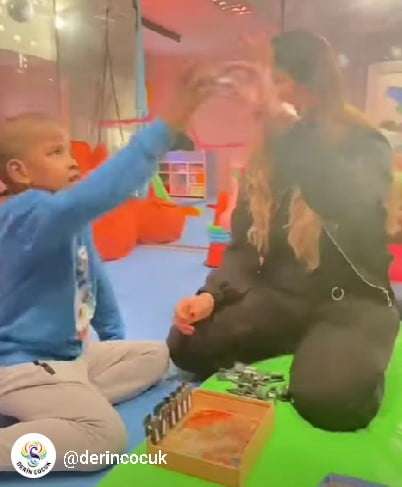
- Behavioural support (ABA-based): Teaching communication, social and daily-living skills, and reducing behaviours that interfere with learning.
- Speech and language therapy: Building communication — which is not limited to spoken words and can include gestures and other systems.
- Occupational therapy & sensory support: Helping with motor skills, daily routines and sensory needs.
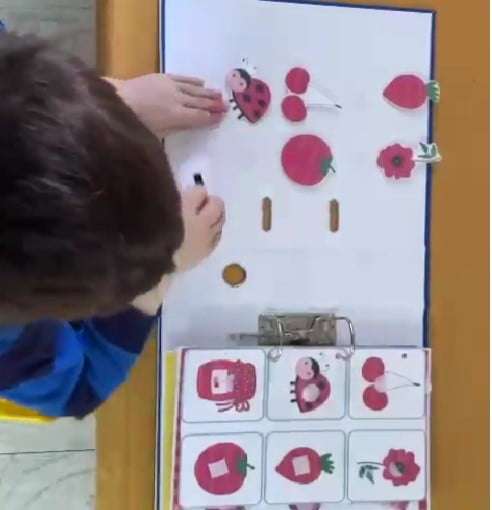
- Foundational learning skills first: Attention, joint attention, imitation and responding to one’s name are “pre-requisite” skills that make later progress possible.
- Family involvement: Carrying strategies into home life (“child–school–family”) is one of the strongest predictors of progress.
A note on medication: there is no medication that treats the core features of autism. A doctor may sometimes prescribe medication for specific co-occurring issues (such as significant anxiety or sleep difficulties), but this is a medical decision, is generally used cautiously, and is not a substitute for education and therapy. We do not provide medical or medication advice — please consult your doctor.
Approaches to Avoid
Because families understandably want to help, the internet is full of products that promise too much. Please be cautious:
- Chelation and “heavy-metal detox”: These are not treatments for autism and can be dangerous — including serious harm to the kidneys and, in rare cases, death. Health authorities advise against using them for autism.
- Special diets (e.g. gluten-free/casein-free): Evidence does not support these as a treatment for autism’s core features. If you suspect a food intolerance or want to try a diet, do it only under a doctor or dietitian so your child’s nutrition stays safe.
- “Miracle cures” of any kind: Autism is lifelong; any product promising to “cure” it should be treated with skepticism.
Our Centers in Istanbul
We support families across Istanbul and can arrange English-speaking guidance. Our locations:
- Bakırköy / Florya — phone 0533 548 91 14
- Bağcılar — phone 0505 637 28 38
- Bahçelievler
Frequently Asked Questions
Can my child be assessed and supported in English in Istanbul?
Yes. We can guide you in English through assessment, the RAM/ÇÖZGER process, and building a therapy program. Contact us to arrange a first conversation.
Is “atypical autism” a real diagnosis?
Not anymore. It was a DSM-IV term removed in 2013. Milder presentations are now part of Autism Spectrum Disorder, often described as “Level 1.” See our dedicated page on atypical autism for more.
Does the M-CHAT-R diagnose autism?
No. The M-CHAT-R is a screening tool for toddlers that flags possible risk. A diagnosis requires a formal evaluation by qualified professionals.
Is there a medication or a cure for autism?
There is no medication for the core features of autism and no “cure.” The most effective support is early special education and therapy; any medication for co-occurring issues is a separate medical decision made with your doctor.
📞 Free assessment & information (English)
Our centers: Bakırköy · Bağcılar · Bahçelievler